Easy DIY Slow Cooker Dog Food Recipes: A Complete Guide to Feeding Your Pup Right
Ever wonder if you could ditch the mystery meat in store-bought kibble and make something better at home? I get it. Easy DIY slow cooker dog food recipes have become my go-to solution for feeding my dog real, whole ingredients without spending hours in the kitchen. If you’re tired of squinting at ingredient labels you can’t pronounce, you’re in the right place.
I spent weeks testing different slow cooker dog food batches, tweaking ratios, and researching what vets actually recommend. What I found surprised me. Most articles online skip the boring but important stuff—like how much to feed based on your dog’s weight, which vegetables are actually dangerous, and how long this food stays safe in your fridge. So let’s fix that.
What Exactly Is Slow Cooker Dog Food?
Before diving into recipes, let’s get clear on what we’re actually making.
Slow cooker dog food refers to homemade meals prepared using a slow cooker (also called a Crock-Pot), where meat, vegetables, and grains simmer together over low heat for several hours. This method breaks down tough proteins and fibers, making the food easier for dogs to digest.
Balanced homemade diet means the meal includes the right proportions of protein, carbohydrates, fats, and micronutrients your dog needs daily. This isn’t just tossing chicken and rice into a pot—it’s about hitting nutritional targets.
Complete and balanced is a term used by veterinary nutritionists to describe food that meets all of a dog’s daily nutritional requirements without needing extra supplements.
Batch cooking means making a large quantity at once and freezing portions for later use, saving you time throughout the week.
Slow cookers work great because they require minimal supervision. You dump ingredients in, walk away, and come back to a fully cooked meal. No stirring, no burning, no standing over a stove. That’s the whole appeal here—convenience without sacrificing quality.
Why Make Your Own Dog Food?
I know what you’re thinking. Isn’t this a lot of extra work? Honestly, not really. Here’s why so many dog owners are switching to homemade meals:
- You control every single ingredient that goes into the bowl.
- It’s often cheaper than premium commercial brands when you buy in bulk.
- Dogs with allergies or sensitive stomachs often do better on simple, whole-food diets.
- You avoid preservatives, fillers, and mystery byproducts.
- Senior dogs and picky eaters frequently show more interest in fresh food.
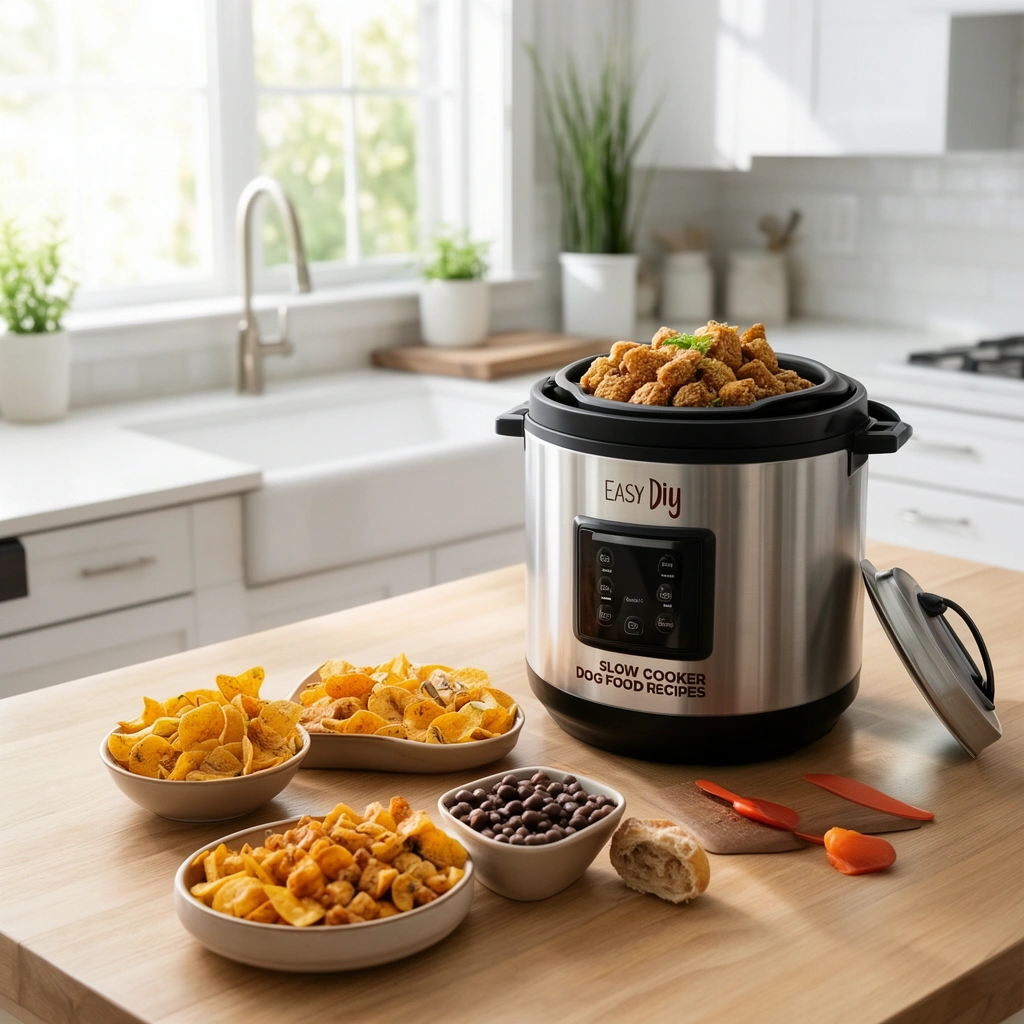
That said, homemade doesn’t automatically mean healthier. You still need to balance nutrients properly. This is the part a lot of blogs gloss over, so let’s not skip it.
Ingredients You’ll Need
Here’s a basic breakdown for a standard batch that feeds a medium-sized dog (around 40-50 pounds) for roughly one week, assuming this is used as a supplement or occasional meal rather than a sole diet without vet guidance.
- 2 pounds lean ground turkey or chicken (protein source)
- 1 cup brown rice or quinoa (carbohydrate source)
- 1 cup diced carrots
- 1 cup chopped green beans
- 1/2 cup diced sweet potato
- 2 cups low-sodium chicken broth (no onion or garlic)
- 1 tablespoon fish oil or flaxseed oil (omega-3 fatty acids)
- 1 teaspoon turmeric (optional, anti-inflammatory support)
- Eggshell powder or a calcium supplement (this is often missing, and dogs need calcium for bone health)
Step-by-Step Cooking Process
Ready to actually make this? Here’s exactly how I do it, step by step.
- Rinse and dice all vegetables into small, bite-sized pieces so they cook evenly and are easier for your dog to chew.
- Place the raw ground meat directly into the slow cooker. No need to pre-cook it.
- Add the diced carrots, green beans, and sweet potato on top of the meat.
- Pour in the rice or quinoa along with the broth. Make sure there’s enough liquid to fully submerge the ingredients.
- Set the slow cooker to low heat and cook for 6 to 8 hours, or high heat for 3 to 4 hours if you’re short on time.
- Once cooking finishes, check that the meat reaches an internal temperature of at least 165°F to ensure it’s fully cooked.
- Let the mixture cool for about 20 minutes before stirring in the fish oil, turmeric, and calcium supplement. Adding these after cooking preserves their nutritional value since heat can degrade certain vitamins.
- Mash or shred the meat slightly with a fork to make portioning easier.
- Divide the finished food into meal-sized containers or freezer bags once fully cooled.
Portioning and Feeding Guidelines
This is where a lot of recipe blogs drop the ball. Feeding the right amount matters just as much as what’s in the bowl.
- Small dogs (under 20 lbs): roughly 1/2 to 3/4 cup per meal
- Medium dogs (20-50 lbs): roughly 1 to 1.5 cups per meal
- Large dogs (50-90 lbs): roughly 2 to 3 cups per meal
- Giant breeds (90+ lbs): 3+ cups, adjusted based on activity level
These are starting points, not strict rules. Every dog’s metabolism, age, and activity level differ. I always recommend checking with your vet before making homemade food a regular part of your dog’s diet, especially if it’s replacing commercial food entirely.
Storage and Food Safety
Homemade dog food doesn’t have preservatives, so it won’t last as long as bagged kibble. Here’s what I follow:
- Refrigerate cooked food in airtight containers for up to 4 days.
- Freeze portions for up to 3 months in freezer-safe bags or containers.
- Thaw frozen portions in the fridge overnight, never at room temperature.
- Always let food cool to room temperature before serving to avoid mouth burns.
Tips for Success
- Cut vegetables uniformly so nothing overcooks while other pieces stay hard.
- Introduce homemade food gradually over 5-7 days, mixing it with your dog’s current food to avoid stomach upset.
- Rotate protein sources occasionally (chicken, turkey, beef) to prevent boredom and reduce allergy risk from feeding the same protein constantly.
- Keep a feeding journal for the first two weeks to track your dog’s energy, stool quality, and appetite.
- Talk to your vet about adding a vitamin-mineral supplement if this becomes a regular meal replacement.
Common Mistakes and How to Avoid Them
Mistake: Adding onions, garlic, or chives for flavor.
Fix: These are toxic to dogs and can cause serious blood cell damage. Skip them entirely, even in small amounts.
Mistake: Forgetting calcium.
Fix: Meat-heavy diets without bone or calcium supplementation can lead to mineral imbalances over time. Ground eggshell or a vet-approved calcium powder solves this.
Mistake: Overfeeding because homemade food “seems healthier.”
Fix: Stick to portion guidelines based on weight and adjust based on your dog’s body condition, not just instinct.
Mistake: Using fatty cuts of meat.
Fix: Excess fat can trigger pancreatitis in some dogs. Stick to lean proteins like turkey breast or lean ground beef.
Mistake: Not consulting a vet before switching diets long-term.
Fix: A quick conversation with your vet or a veterinary nutritionist ensures the recipe actually meets your dog’s specific health needs.
Similar Variations You Can Try
Once you’ve got the basic method down, mixing things up is easy.
- Fish and Pumpkin Recipe: Swap turkey for salmon or whitefish, and use canned pumpkin instead of sweet potato for dogs with sensitive digestion.
- Beef and Barley Recipe: Use lean ground beef with barley instead of rice for a heartier, higher-fiber option.
- Low-Fat Senior Recipe: Reduce protein slightly, add more fiber-rich vegetables like zucchini and spinach, and skip added oils for older dogs needing fewer calories.
- Grain-Free Version: Replace rice with mashed butternut squash or extra sweet potato for dogs with grain sensitivities.
- Puppy-Friendly Version: Increase protein ratio slightly and consult your vet about calcium-to-phosphorus ratios, since growing puppies have different nutritional needs than adults.
Wrapping It Up
Making your own dog food doesn’t have to be complicated or time-consuming. With a slow cooker, some basic ingredients, and a little planning, you can create meals that are fresher and more transparent than most commercial options. Just remember, balance matters more than fancy ingredients. Keep portions in check, avoid toxic additions like onion and garlic, and loop your vet in if this becomes your dog’s main diet.
At the end of the day, easy DIY slow cooker dog food recipes give you control over what your best friend eats, without turning your kitchen into a second job. Give one of these recipes a try this week, and watch how much your pup enjoys mealtime.