Fast Meals Healthy Homemade Dog Food: Quick Recipes Your Pup Will Beg For
Ever come home late, tired, and hungry, only to realize your dog needs dinner too? I’ve been there more times than I can count. That’s exactly why I started digging into fast meals healthy homemade dog food options that don’t eat up my entire evening. You don’t need hours in the kitchen or a culinary degree to make something nutritious for your furry buddy. You just need the right ingredients, a simple plan, and maybe fifteen minutes to spare.
In this guide, I’m sharing everything I wish someone had told me when I first started cooking for my dog. We’ll cover the exact steps, common slip-ups, smart variations, and tips that actually work in real life, not just on paper.
Why Homemade Dog Food Deserves a Spot in Your Routine
Store-bought kibble is convenient, sure. But a lot of it hides fillers, preservatives, and mystery meat that your dog’s body has to work overtime to process. Cooking at home lets you control exactly what goes into the bowl. You know where the chicken came from. You know there’s no weird chemical name you can’t pronounce.
Fast homemade meals aren’t about replacing every single meal forever. They’re about having a reliable backup plan for busy weeks, picky eaters, or dogs with sensitive stomachs. Plus, dogs genuinely seem happier eating real food. Mine does a little spin every time I pull out the cutting board.
Key Terms You Should Know Before You Start
Before jumping into recipes, let’s clear up some terms that pop up a lot in the homemade dog food world.
Complete and balanced
: A meal that contains all the nutrients a dog needs in the correct ratios, including protein, fat, carbs, vitamins, and minerals.
Protein source
: The main meat or plant-based ingredient providing amino acids, like chicken, turkey, beef, or lentils.
Calcium-phosphorus ratio
: The balance between calcium and phosphorus in a dog’s diet, which needs to stay close to correct proportions to support bone health.
Rotational feeding
: Switching between different proteins and recipes over time to reduce the risk of nutrient gaps or food sensitivities.
Batch cooking
: Preparing large amounts of food at once and portioning it out for later, which is basically the backbone of fast homemade dog food.
Knowing these terms helps you make smarter choices instead of just tossing ingredients into a pot and hoping for the best.
What You’ll Need for a Fast, Healthy Batch
Here’s the good news: you probably already have most of this stuff in your kitchen.
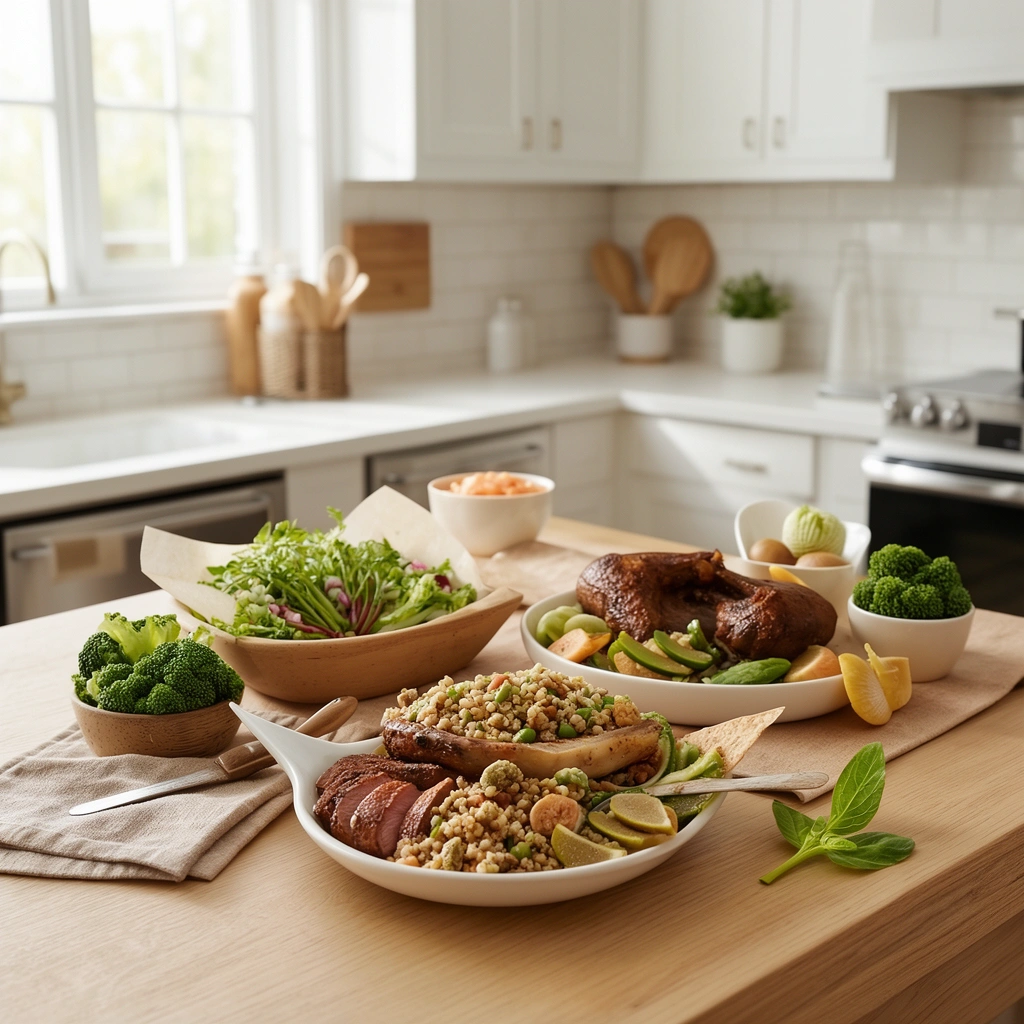
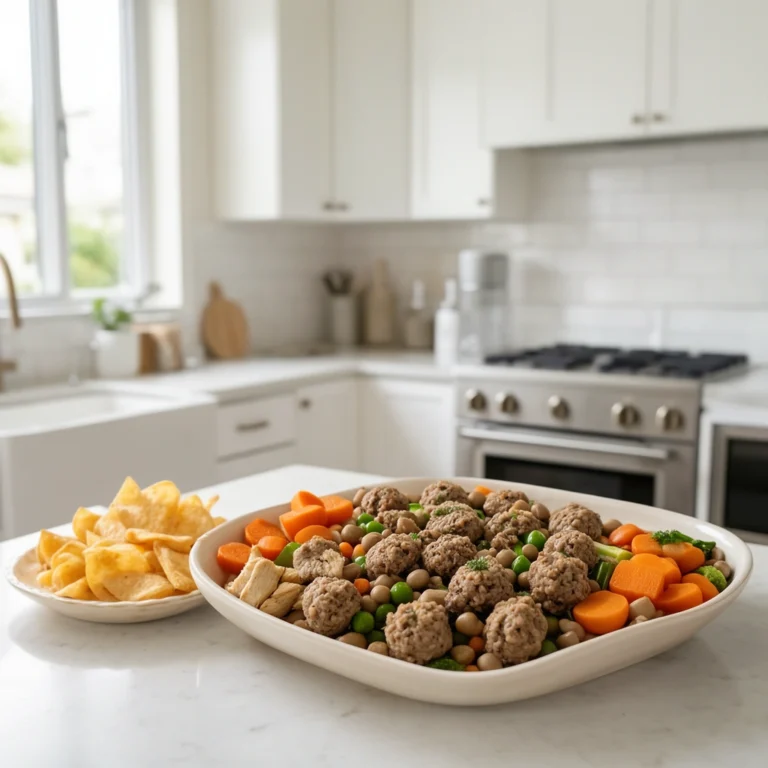
- Lean protein (ground turkey, chicken breast, or lean beef)
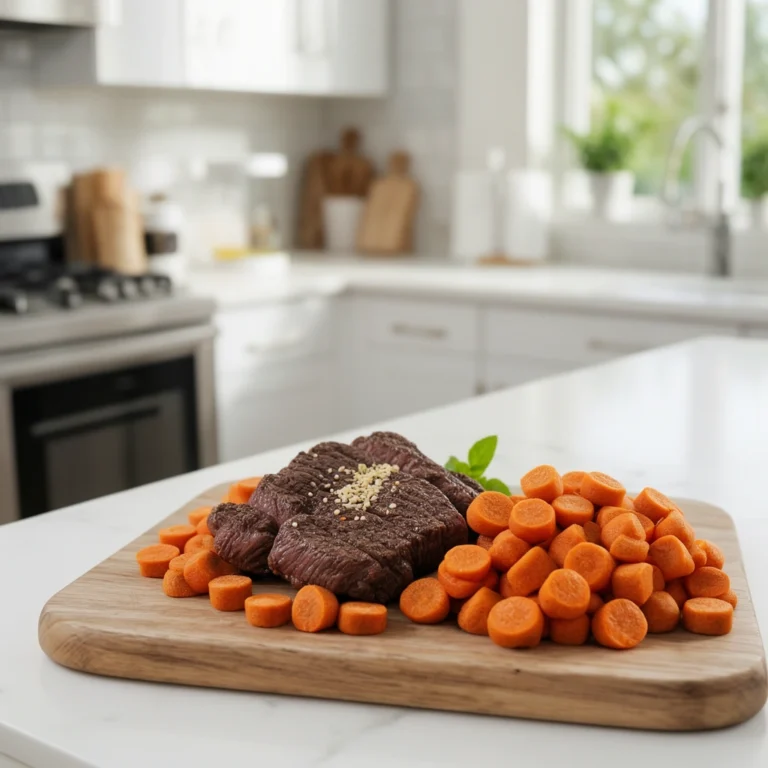
- A carb source (brown rice, sweet potato, or quinoa)
- Veggies (carrots, green beans, spinach, or pumpkin)
- A healthy fat (a small amount of olive oil or fish oil)
- A calcium source (crushed eggshell powder or a vet-approved supplement)
- A large pot or slow cooker
- Freezer-safe containers or silicone trays for portioning
That’s it. No fancy gadgets required.
Step-by-Step: Making Fast Homemade Dog Food
Let’s get into the actual cooking. I’ve tested this method more times than I’d like to admit, and it holds up well even on my most exhausted days.
- Step 1: Prep your ingredients. Dice the protein and vegetables into small, even pieces. Smaller pieces cook faster and are easier for dogs to chew and digest.
- Step 2: Cook the protein first. Add your meat to a pot with a splash of water. Cook on medium heat until fully done, no pink left inside. This usually takes 8 to 10 minutes for ground meat.
- Step 3: Add your carbs. Toss in the rice, sweet potato, or quinoa. If using rice, add extra water since it needs more liquid to cook through.
- Step 4: Stir in the veggies. Carrots and green beans go in a few minutes before everything else finishes, since they cook fast and can turn mushy if overdone.
- Step 5: Simmer until everything’s tender. This whole process rarely takes more than 20 minutes total.
- Step 6: Cool completely. Never portion or freeze food while it’s still hot. Let it sit at room temperature for about 30 minutes.
- Step 7: Mix in your calcium source and healthy fat. Stir these in after cooking so heat doesn’t destroy nutrients.
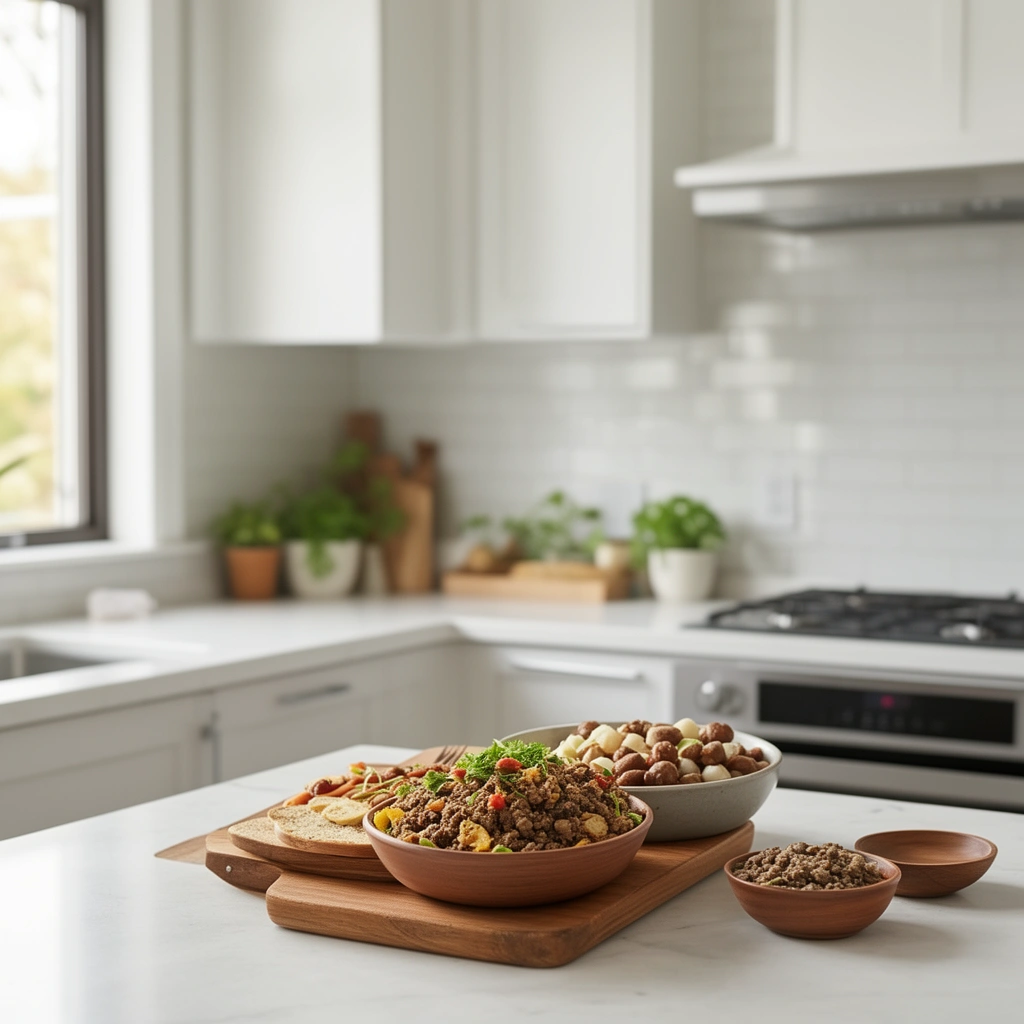
- Step 8: Portion and store. Divide into daily servings based on your dog’s weight, then refrigerate what you’ll use in the next 3 days and freeze the rest.
That’s the whole process. Once you’ve done it twice, it becomes second nature.
Portion Guide Based on Dog Size
A lot of guides skip this part, and it’s honestly one of the most important pieces of the puzzle. Feeding too much or too little defeats the purpose of cooking at home in the first place.
Small dogs (under 20 lbs)
: Roughly ¾ to 1 cup of finished food per day, split into two meals.
Medium dogs (20–50 lbs)
: About 1.5 to 2.5 cups daily, divided into two servings.
Large dogs (50–90 lbs)
: Around 3 to 4 cups per day, adjusted based on activity level.
Giant breeds (90+ lbs)
: Typically 4 to 5 cups daily, but always check with your vet since giant breeds have unique nutritional needs.
These are starting points, not strict rules. Every dog’s metabolism, age, and activity level plays a role, so keep an eye on their weight and energy over the first few weeks.
Tips for Success
- Always cook meat fully. Raw or undercooked meat can carry bacteria that’s harmful to dogs.
- Batch cook on Sundays. Making a big pot once a week saves you from scrambling every night.
- Use ice cube trays for small dogs. They create perfectly sized portions without guesswork.
- Talk to your vet before switching fully to homemade food. They can help you spot any nutrient gaps.
- Rotate proteins every few weeks. This keeps meals interesting and reduces the chance of developing a food sensitivity.
- Label your containers. Write the date on each container so you always use the oldest batch first.
Common Mistakes and How to Avoid Them
Mistake: Skipping the calcium source.
Many homemade recipes look balanced but miss calcium entirely. Without it, dogs can develop bone and joint issues over time. Fix this by always adding a calcium supplement or eggshell powder.
Mistake: Using too much garlic or onion.
These are toxic to dogs, even in small amounts. Double-check every recipe you follow for hidden ingredients that seem harmless to us but aren’t safe for pups.
Mistake: Overcooking vegetables until they lose nutrients.
Mushy veggies aren’t just unappealing, they can lose a chunk of their vitamin content. Add them later in the cooking process to keep more nutrients intact.
Mistake: Freezing food in one giant block.
This makes portioning a nightmare later. Always divide meals into daily or weekly portions before freezing.
Mistake: Assuming one recipe fits every dog.
Puppies, seniors, and dogs with health conditions often need adjusted ratios of protein, fat, and carbs. What works for your neighbor’s dog might not work for yours.
Tasty Variations to Keep Things Interesting
Once you’ve nailed the basic method, it’s fun to switch things up. Here are a few variations I’ve tried and loved.
- Fish-based meals: Swap chicken for salmon or white fish for dogs who need omega-3 support for their skin and coat.
- Slow cooker version: Toss everything into a slow cooker in the morning and let it run for 6 hours on low. Perfect for busy days.
- Grain-free option: Replace rice with mashed sweet potato or pumpkin for dogs with grain sensitivities.
- Senior dog blend: Add more soft-cooked vegetables and reduce fat slightly to support aging joints and digestion.
- Puppy-friendly mix: Increase protein slightly and cook everything a bit softer for easier chewing.
These small tweaks let you customize meals without starting from scratch every time.
Wrapping It Up
Cooking fast meals healthy homemade dog food doesn’t have to feel like a chore. Once you understand the basic formula, protein, carbs, veggies, healthy fat, and calcium, you can whip up a nutritious batch in under thirty minutes. Batch cooking on a slower day means you’re always ready, even on your busiest nights.
Your dog doesn’t need anything fancy. They just need real food made with a little care, and honestly, that’s something both of you will enjoy. So grab that pot, pick a protein, and give homemade cooking a try. Your pup’s wagging tail will tell you everything you need to know.