Low Fat Dog Treats: A Simple Guide to Healthier Homemade Snacks
Ever caught yourself staring at the back of a store-bought dog treat bag, squinting at the fat content, and wondering if there’s a better way? I get it. When my vet mentioned my dog’s weight was creeping up, low fat dog treats became my new obsession. Turns out, making them at home isn’t just easier than I thought—it’s actually kind of fun.
This guide walks you through everything I wish someone had told me from the start. We’ll cover what makes a treat “low fat,” how to make a batch that your dog will actually beg for, and the mistakes that trip up even experienced home bakers.
What We’re Making Today: Low Fat Chicken and Sweet Potato Bites
I’m going to walk you through a recipe for low fat chicken and sweet potato dog treats. Why this combo? Chicken breast is naturally lean, sweet potato adds fiber and natural sweetness, and together they make a treat that smells amazing while baking (your kitchen will smell like dinner, honestly).
These treats work great for dogs on weight management plans, senior dogs with slower metabolisms, or any pup who just doesn’t need the extra calories from typical jerky treats. They’re crunchy on the outside, a little chewy in the middle, and hold together well enough for training sessions too.
Key Terms You Should Know
Before jumping into the recipe, let’s clear up some terms that get thrown around a lot in the dog treat world.
Low Fat
: A treat containing less than 10% fat on a dry matter basis. Most standard dog treats sit much higher than this.
Lean Protein
: Meat sources like chicken breast, turkey, or white fish that contain minimal fat compared to red meats or fatty cuts.
Dehydrating
: A cooking method that removes moisture using low, steady heat over a long period, often used as an alternative to baking.
Binder
: An ingredient like egg or pumpkin puree that holds the treat mixture together without adding excessive fat.
Rendering
: The process where fat melts out of meat during cooking, which is why baking or boiling lean meats helps reduce fat content further.
Dry Matter Basis
: A way of measuring nutrient content after removing water, giving a more accurate picture of fat percentage.
Why Low Fat Treats Actually Matter
I used to think fat content was only a big deal for overweight dogs. That’s not the whole story.
- Pancreatitis risk — High fat foods can trigger this painful condition, especially in breeds like Miniature Schnauzers and Yorkies who are already prone to it.
- Weight management — Treats often make up more calories than owners realize, sometimes 10-20% of a dog’s daily intake.
- Senior dog needs — Older dogs move less and need fewer calories, but they still deserve treats during training or just for love.
- Post-surgery diets — Vets frequently recommend low fat diets during recovery periods.
- General heart health — Just like in humans, excess fat over time isn’t doing your dog’s cardiovascular system any favors.
Ingredients You’ll Need
- 1 large boneless, skinless chicken breast (about 1 cup cooked and shredded)
- 1 medium sweet potato, cooked and mashed
- 1 cup oat flour (or ground rolled oats)
- 1 egg
- 1/4 cup plain, unsweetened applesauce
- A pinch of cinnamon (optional, but dogs seem to love it)
Notice there’s no butter, oil, or added fat anywhere on that list. That’s the whole point.
Step by Step Making Process
Here’s exactly how I put this together, start to finish.
- Cook the chicken first. Boil or bake the chicken breast until fully cooked, then shred it finely using two forks or a food processor.
- Prepare the sweet potato. Peel, boil until soft, and mash it well. Let it cool slightly before mixing.
- Preheat your oven to 350°F (175°C) and line a baking sheet with parchment paper.
- Combine wet ingredients. In a large bowl, mix the shredded chicken, mashed sweet potato, egg, and applesauce together.
- Add the oat flour gradually. Stir it in a little at a time until you get a dough that’s firm but not crumbly. It should hold together when pressed.
- Roll out the dough on a lightly floured surface to about 1/4 inch thickness.
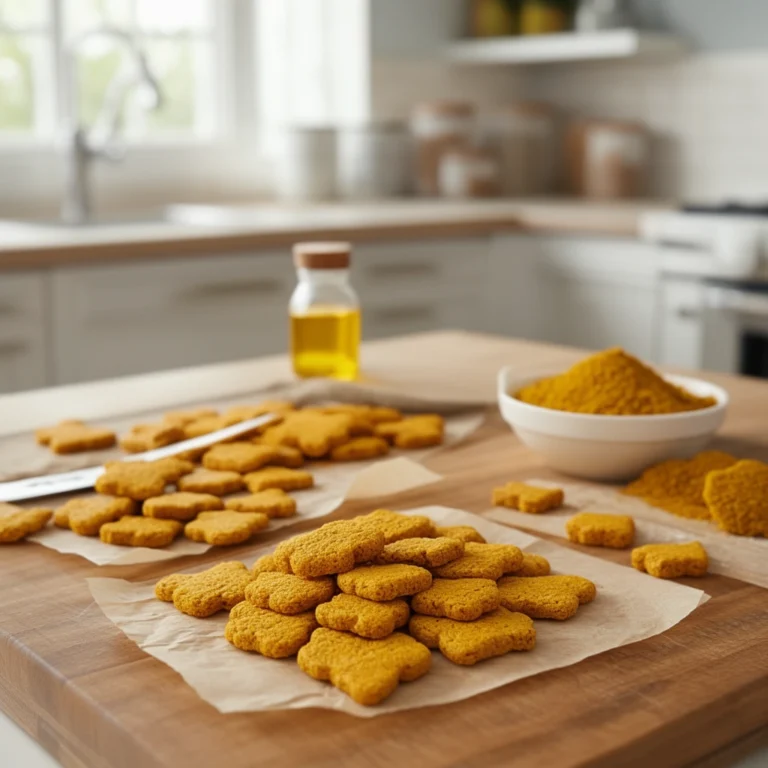
- Cut into shapes. Use a cookie cutter, or honestly, just a knife for simple squares works fine too.
- Place treats on the baking sheet, leaving a little space between each one.
- Bake for 20-25 minutes, flipping halfway through for even crisping.
- Cool completely before storing or serving. This step matters more than people think—warm treats can go soft and mushy.
Storage Tips
Once cooled, keep these treats in an airtight container in the fridge for up to a week. Want them to last longer? Pop them in the freezer for up to three months. I usually make a double batch and freeze half, because trust me, one batch disappears fast once your dog catches the scent.
Tips for Success
- Always shred meat finely so the dough holds together without gaps.
- Don’t skip the cooling step before baking the dough—warm sweet potato can make the mixture too sticky to roll.
- Use a food scale if you’re tracking calories closely for a dog on a strict diet.
- Bake in smaller batches if your oven has hot spots, rotating trays halfway through.
- Test one treat before storing the whole batch to check texture and crunch level.
- Keep treat sizes small. Even low fat treats add up in calories if they’re the size of a burger patty.
Common Mistakes and How to Avoid Them
Mistake: Using fatty cuts of meat
: Ground beef or dark meat chicken sneaks in far more fat than you’d expect. Stick to lean cuts like chicken breast or turkey breast.
Mistake: Adding oil “just to help mixing”
: A little water or extra applesauce works just as well without the added fat.
Mistake: Skipping the vet check for dogs with existing conditions
: Even low fat treats need approval if your dog has pancreatitis history or other digestive issues.
Mistake: Over-baking
: This dries treats out completely and can make them rock hard. Keep an eye on them after the 20-minute mark.
Mistake: Ignoring portion control
: Low fat doesn’t mean unlimited. Treats should still stay under 10% of a dog’s daily caloric intake.
Mistake: Using seasoned or salted broth to cook the meat
: Onion, garlic, and heavy salt are all things dogs should avoid entirely. Plain water or unsalted broth only.
Similar Variations You Can Try
Once you’ve nailed the base recipe, switching things up is easy.
- Turkey and pumpkin treats — Swap chicken for ground turkey breast and sweet potato for pumpkin puree. Pumpkin adds fiber and helps with digestion.
- Fish-based treats — Use canned salmon (packed in water, not oil) for dogs who love a fishy flavor and could use some omega-3s.
- Peanut butter version — Add a tablespoon of natural, unsalted, unsweetened peanut butter for flavor without piling on fat. Just check the label for xylitol first, since that’s toxic to dogs.
- Rice-based treats — Replace oat flour with rice flour for dogs with grain sensitivities to oats specifically.
- Herbed veggie treats — Blend in finely grated carrots and a touch of parsley for a fresh, crunchy variation that’s practically all veggie.
- Freeze-dried option — If you own a dehydrator, thin slices of chicken breast alone make an excellent single-ingredient low fat treat.
Wrapping Things Up
Making low fat dog treats at home really isn’t complicated once you get the hang of it. You control exactly what goes in, you skip the mystery ingredients from store bags, and your dog gets a snack that supports their health instead of working against it.
Give this chicken and sweet potato recipe a try, and don’t be afraid to experiment with the variations once you’ve got the basics down. Your dog won’t know the difference between “diet treat” and “regular treat”—they’ll just know it’s delicious, and that’s really all that matters when it comes to good low fat dog treats.