Low Calorie Dog Treats: A Complete Guide to Healthy Homemade Snacks
Ever wonder if you can spoil your dog with treats without piling on the pounds? I know I have. My own pup gives me those puppy-dog eyes every single time I open the pantry, and saying no just isn’t in my vocabulary. That’s why I started making low calorie dog treats at home, and honestly, it changed the game for both of us. She gets her snack, I don’t feel guilty, and her vet actually complimented her weight at the last checkup.
If your furry friend is carrying a little extra weight, or you just want to be smarter about treat time, you’re in the right place. I’ll walk you through everything—what makes a treat “low calorie,” how to make one from scratch, mistakes to dodge, and fun variations to keep things interesting.
Why Low Calorie Treats Matter for Your Dog
Dogs don’t know when to stop. That’s just the truth. They’ll eat a whole bag of treats if you let them, and those little snacks add up fast. Vets often say treats shouldn’t make up more than 10% of a dog’s daily calorie intake. Sounds simple, but most store-bought treats are loaded with fillers, sugar, and fat that blow past that limit in just a few bites.
Overweight dogs face real risks—joint problems, diabetes, heart issues, and a shorter lifespan. That’s not fear-mongering, that’s just biology. So switching to low calorie treats isn’t about depriving your dog. It’s about giving them something they love without the hidden cost.
What Exactly Are Low Calorie Dog Treats?
Before jumping into recipes, let’s get clear on what we’re talking about.
Low Calorie Treat
: A snack that provides minimal calories (usually under 10 calories per piece) while still offering flavor and nutritional value.
Filler Ingredients
: Cheap bulking agents like corn syrup or excess starch that add calories without nutrition.
Lean Protein
: Meats low in fat, such as chicken breast or turkey, which give dogs protein without excess calories.
Fiber-Rich Vegetables
: Foods like pumpkin, green beans, or carrots that fill your dog up without packing on calories.
Caloric Density
: The amount of energy (calories) packed into a given amount of food. Lower density means your dog can eat more volume without gaining weight.
Understanding these terms helps you read labels better and make smarter choices, whether you’re baking at home or shopping the aisles.
The Recipe I’m Making Today: Pumpkin and Chicken Low Calorie Dog Treats
I want to share a recipe that’s become a staple in my kitchen. It’s simple, cheap, and my dog goes absolutely nuts for it. Pumpkin gives fiber and a subtle sweetness dogs love, while chicken adds protein without the fat you’d get from beef or pork. Together, they make a treat that’s satisfying but light on calories.
This recipe isn’t just tasty—it’s also gentle on sensitive stomachs. Pumpkin is often recommended by vets for digestive issues, so this treat pulls double duty.
Ingredients You’ll Need
- 1 cup pumpkin puree (plain, no added sugar or spices)
- 1 cooked chicken breast, shredded finely
- 1 cup oat flour (or ground oats)
- 1 egg
- A pinch of cinnamon (optional, dogs love the smell)
Step-by-Step Instructions
Here’s exactly how I make these treats from start to finish.
- Preheat your oven to 350°F (175°C).
- In a large bowl, mix the pumpkin puree and shredded chicken together until well combined.
- Crack the egg into the mixture and stir thoroughly.
- Slowly add the oat flour, mixing until a thick dough forms. It shouldn’t be sticky, but firm enough to roll.
- Sprinkle a little extra oat flour on a flat surface, then roll the dough out to about ¼ inch thickness.
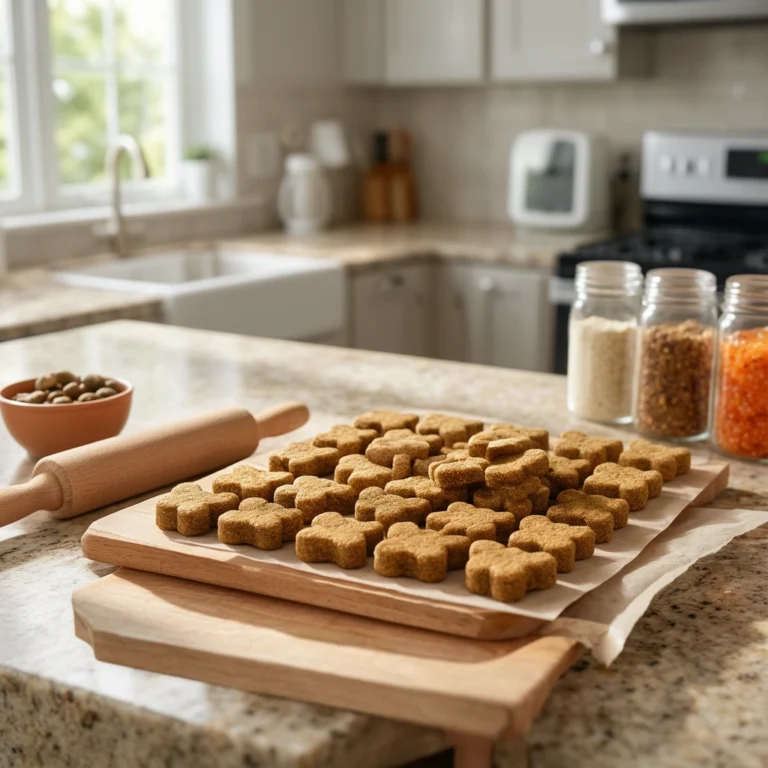
- Use a small cookie cutter (bone shapes are fun, but any shape works) to cut out treats.
- Place the treats on a parchment-lined baking sheet, spacing them slightly apart.
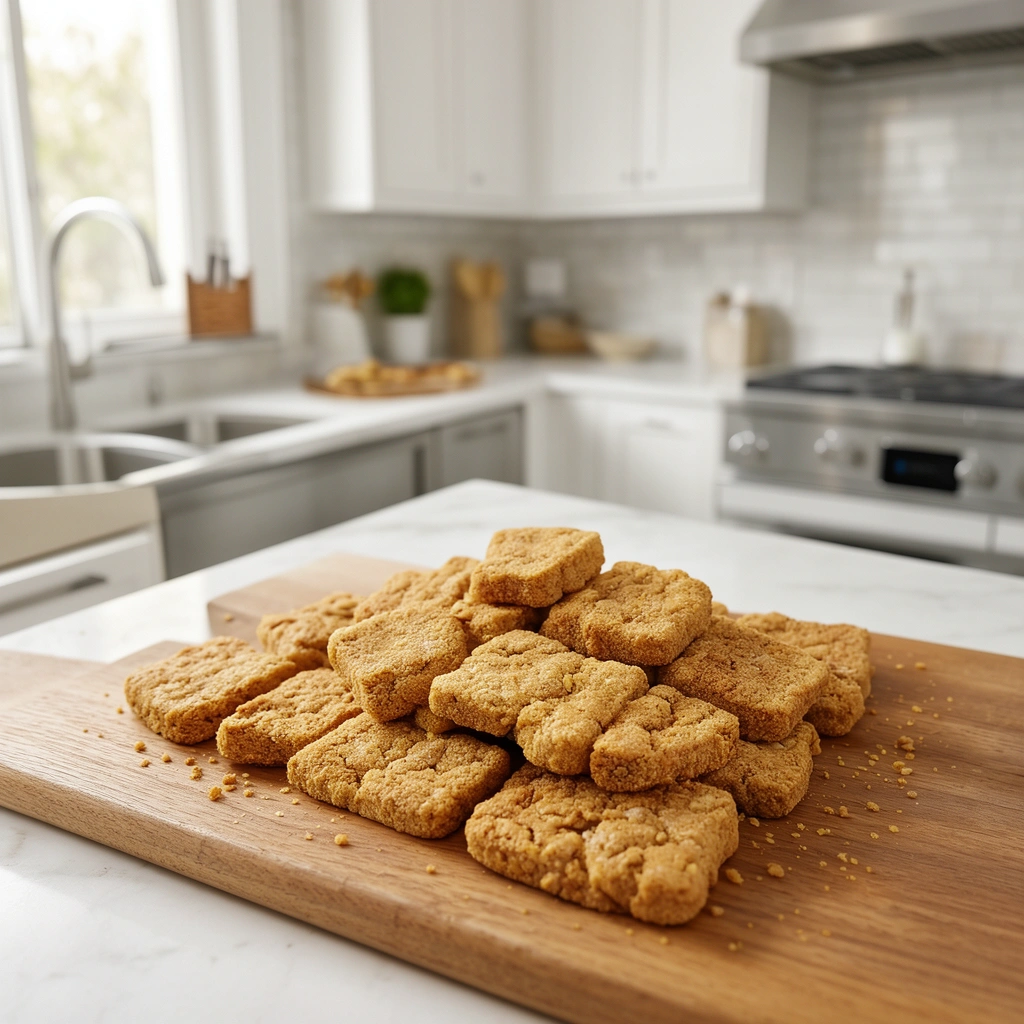
- Bake for 20–25 minutes, or until they’re firm and lightly golden.
- Let them cool completely before serving. This step matters—warm treats can crumble apart.
Each treat comes out to roughly 8–10 calories, depending on size. That means you can toss a few during training sessions without worrying about your dog’s waistline.
Tips for Success
Making treats at home is pretty forgiving, but a few small tricks make a big difference.
- Use plain canned pumpkin, never pumpkin pie filling—that stuff is loaded with sugar and spices that aren’t dog-friendly.
- Shred the chicken finely so the dough holds together evenly.
- Store treats in an airtight container in the fridge for up to a week, or freeze for longer storage.
- Cut treats small. Remember, portion size directly affects calorie count.
- Let your dog sniff the dough before baking—some dogs get extra excited about treats they “helped” make (even if they didn’t really help).
Common Mistakes and How to Avoid Them
I’ve made plenty of treat-baking blunders over the years. Here’s what to watch out for.
Overbaking the Treats
: This dries them out completely and can make them rock hard. Keep an eye on the oven after the 20-minute mark.
Using Sweetened Pumpkin
: Pumpkin pie mix seems like a shortcut, but it’s packed with sugar and spices like nutmeg, which is toxic to dogs in large amounts.
Skipping Portion Control
: Even low calorie treats can add up if you’re handing out a dozen a day. Stick to a few per session.
Not Cooling Treats Fully
: Warm treats crumble and lose their shape, making a mess and wasting your effort.
Forgetting to Check for Allergies
: Some dogs react poorly to eggs or oats. Always introduce new ingredients slowly and watch for reactions like itching or upset stomach.
Variations You Can Try
One of the best parts about homemade treats is how easy they are to customize. Here are a few variations I’ve experimented with.
- Peanut Butter Swap: Replace chicken with a tablespoon of unsweetened, xylitol-free peanut butter for a different flavor profile.
- Sweet Potato Version: Swap pumpkin for mashed sweet potato for a slightly sweeter, nutrient-dense treat.
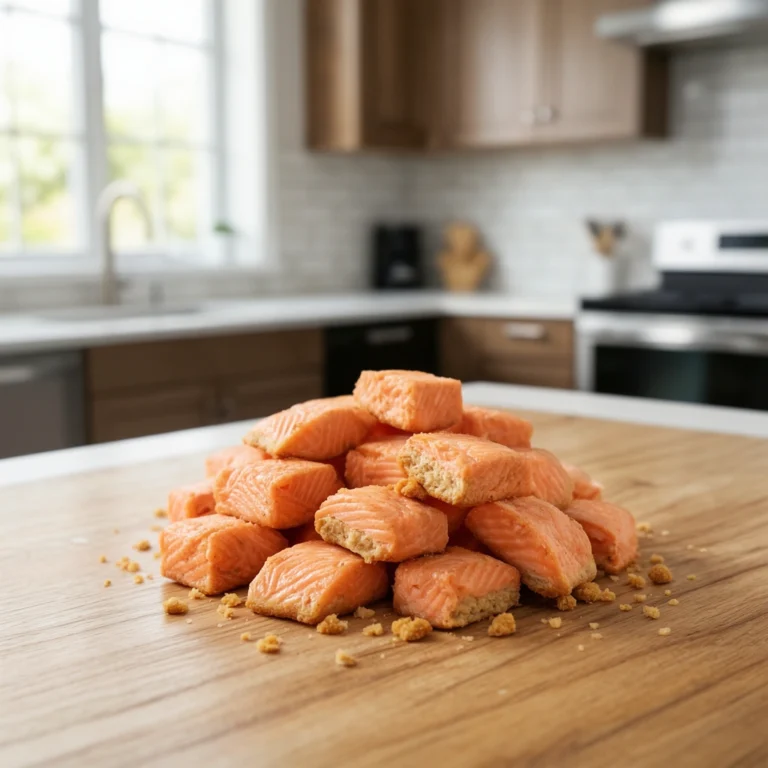
- Fish-Based Treats: Use canned salmon or tuna (in water, no salt added) instead of chicken for dogs who love seafood.
- Vegetable Boost: Add finely grated carrots or zucchini into the dough for extra fiber and crunch.
- Grain-Free Option: Substitute oat flour with chickpea flour or coconut flour if your dog has grain sensitivities.
Each variation keeps the calorie count low while giving your dog something new to enjoy. Rotating flavors also helps prevent boredom, which, let’s be honest, dogs get just like we do.
How to Store and Serve Low Calorie Treats
Storage matters just as much as the recipe itself. Homemade treats don’t have preservatives, so they won’t last as long as store-bought ones.
- Keep treats in the fridge for up to 7 days in an airtight container.
- Freeze extras in a sealed bag for up to 3 months. Just thaw a few at a time as needed.
- Avoid leaving treats out at room temperature for more than a couple hours, especially in warm weather.
- Label containers with the date made, so you always know what’s fresh.
When serving, break treats into smaller pieces for training sessions. This stretches out the reward without overdoing the calories.
When to Talk to Your Vet
I always recommend checking with your vet before making big changes to your dog’s diet, especially if your pup has health issues like diabetes, pancreatitis, or kidney disease. Some ingredients that seem harmless, like certain vegetables or oils, might not be right for dogs with specific conditions. Your vet can also help you figure out exactly how many calories your dog should be eating daily, which makes it easier to plan treats around that number.
Wrapping It Up
Making low calorie dog treats at home isn’t complicated, and the payoff is huge. You get full control over what goes into your dog’s snacks, you save money compared to pricey store-bought bags, and most importantly, you keep your best friend happy and healthy. My dog still does her little happy dance every time she smells pumpkin and chicken baking in the oven, and honestly, that alone makes it worth it.
So next time those puppy eyes come begging, you won’t have to feel guilty. With a batch of homemade low calorie dog treats ready in your fridge, you can say yes as often as you want.