Homemade Lamb And Rice Dog Food Recipe: The Complete Guide Your Pup Deserves
Ever wonder if you’re actually feeding your dog the best food possible? I asked myself that same question a few years back, staring at a bag of kibble with ingredients I couldn’t even pronounce. That’s when I stumbled onto homemade lamb and rice dog food, and honestly, it changed how I think about feeding my furry buddy.
If your dog has a sensitive stomach, itchy skin, or you’re just tired of mystery meat in store-bought food, this recipe might be exactly what you need. Lamb and rice combos are gentle on digestion, packed with nutrients, and surprisingly simple to whip up in your own kitchen.
What Makes Lamb And Rice Dog Food So Special
Lamb and rice dog food isn’t some fancy new trend. Vets have recommended this combo for decades, especially for dogs dealing with allergies or tummy troubles. Lamb is considered a “novel protein” for many dogs, meaning it’s less common in commercial diets and less likely to trigger allergic reactions.
Rice, on the other hand, is one of the easiest carbs for dogs to digest. It’s gentle, doesn’t cause much gas, and gives your pup steady energy throughout the day. When you pair these two together, you get a meal that’s both nourishing and easy on sensitive systems.
I’ve fed this recipe to my own dog during rough patches when her stomach just couldn’t handle anything else. Within days, things settled down. That’s not a coincidence—it’s science backed by years of veterinary nutrition research.
Key Terms You Should Know Before Starting
Understanding a few basic terms will help you make smarter choices while cooking.
Novel Protein
: A protein source your dog hasn’t eaten much before, reducing the chance of an allergic reaction.
Complete And Balanced
: A meal that contains all the essential nutrients—protein, fat, carbs, vitamins, and minerals—in the right proportions for your dog’s health.
Taurine
: An amino acid important for heart health, often lacking in homemade diets unless you add the right ingredients.
Bioavailability
: How well your dog’s body can absorb and use nutrients from a specific food.
Rendered Fat
: Fat that’s been melted down from meat, often trimmed off before cooking to control calorie content.
Ingredients You’ll Need
Before you start cooking, gather these ingredients. I recommend buying everything fresh for the best results.
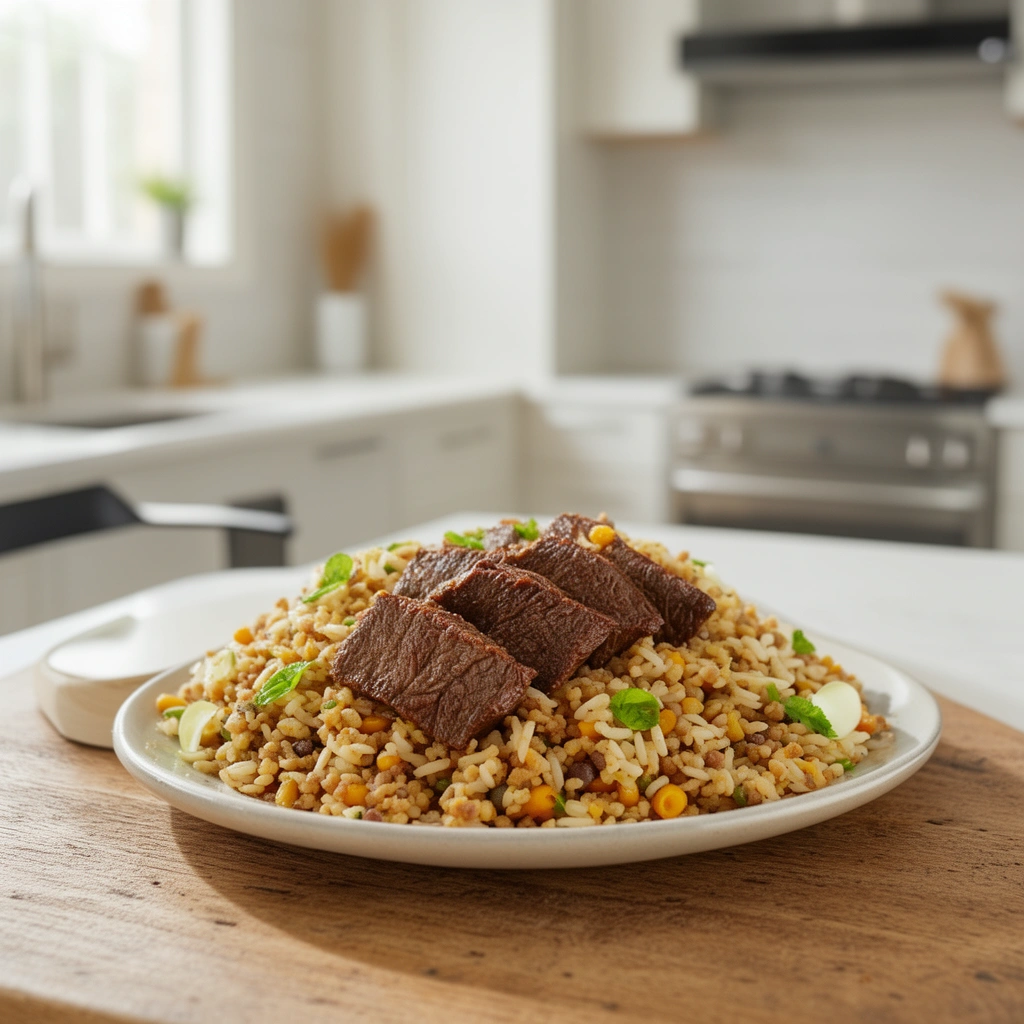
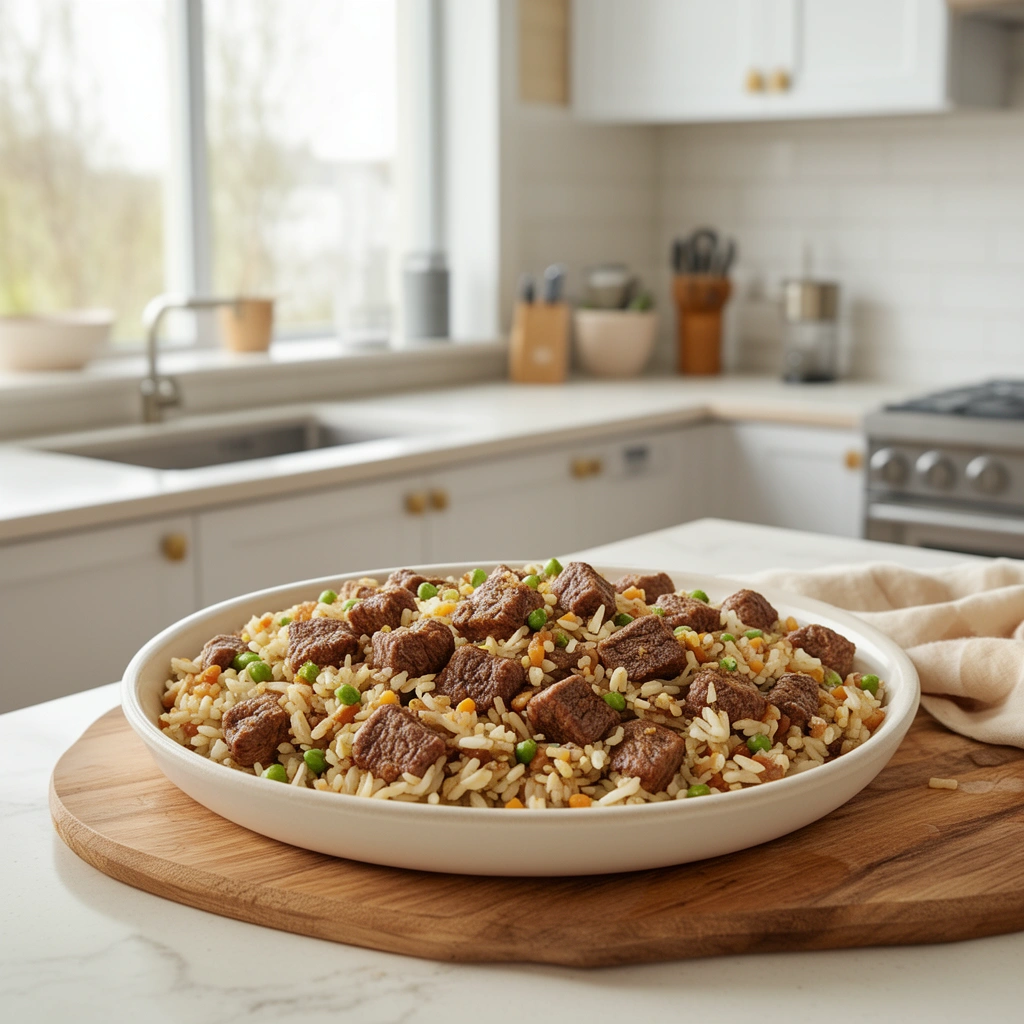
- 2 pounds of ground lamb (or lamb chunks with excess fat trimmed)
- 2 cups of white or brown rice
- 4 cups of water or low-sodium chicken broth
- 1 cup of chopped carrots
- 1 cup of chopped green beans or peas
- 2 tablespoons of fish oil (for omega-3s)
- 1 teaspoon of turmeric (optional, for inflammation support)
- 1 dog-safe multivitamin supplement (check with your vet first)
Step-By-Step Cooking Process
Cooking this recipe doesn’t require any culinary degree. Just follow these steps, and you’ll have a batch ready in under an hour.
- Cook The Rice First: Add rice and water (or broth) into a large pot. Bring it to a boil, then reduce heat and simmer until fully cooked, usually 15-20 minutes.
- Brown The Lamb: While rice cooks, add ground lamb to a separate skillet over medium heat. Cook until no longer pink, breaking it apart as it browns. Drain excess fat if needed.
- Steam The Vegetables: Steam carrots and green beans (or peas) until soft, about 8-10 minutes. Avoid boiling them, since this strips away nutrients.
- Combine Everything: Once rice, lamb, and vegetables are done, mix them together in a large bowl or pot.
- Add The Extras: Stir in fish oil, turmeric, and multivitamin supplement. Mix thoroughly so every bite gets some added nutrition.
- Cool Completely: Let the mixture cool to room temperature before serving or storing.
- Portion And Store: Divide into meal-sized portions using airtight containers. Refrigerate what you’ll use within 4 days, and freeze the rest for up to 3 months.
Tips For Success
Making homemade dog food isn’t hard, but a few small tricks make a big difference.
- Always cook rice separately from lamb to control texture and avoid overcooking either ingredient.
- Trim visible fat off lamb before cooking, since too much fat can upset your dog’s stomach or lead to weight gain.
- Introduce this new food gradually over 5-7 days, mixing it with your dog’s current food to avoid digestive upset.
- Talk to your vet about calcium supplementation, since homemade meals often lack enough calcium found naturally in bones.
- Label your frozen containers with the date, so you always know what’s freshest.
- Use a food scale to portion meals accurately based on your dog’s weight and activity level.
Common Mistakes And How To Avoid Them
I’ve made plenty of mistakes cooking for my dog, so let me save you the trouble.
Mistake: Skipping The Calcium
: Many owners forget that homemade diets need added calcium since there’s no bone content. Add ground eggshell powder or a vet-approved calcium supplement to fix this gap.
Mistake: Using Too Much Fat
: Lamb is naturally fatty. Skipping the fat-trimming step can lead to greasy meals that cause diarrhea or pancreatitis in sensitive dogs.
Mistake: Not Rotating Proteins
: Feeding lamb and rice exclusively for months can create new allergies over time. Rotate proteins occasionally, even if lamb remains your go-to.
Mistake: Ignoring Portion Control
: Homemade food is calorie-dense. Overfeeding leads to weight gain fast. Always measure portions based on your dog’s ideal weight, not guesswork.
Mistake: Forgetting Vet Consultation
: Every dog has unique needs. Skipping a vet check before switching diets can mean missing crucial nutrients your specific dog requires.
Variations You Can Try
Once you’ve mastered the basic recipe, feel free to switch things up based on your dog’s preferences or dietary needs.
- Sweet Potato Swap: Replace rice with mashed sweet potato for dogs needing lower glycemic options.
- Quinoa Base: Swap rice for quinoa if you want extra protein and fiber in each bite.
- Ground Turkey Mix: Blend lamb with ground turkey for a leaner protein option that’s still gentle on digestion.
- Pumpkin Puree Addition: Stir in plain pumpkin puree for extra fiber, especially helpful for dogs with constipation issues.
- Bone Broth Base: Cook rice in homemade bone broth instead of water for added joint-supporting nutrients like glucosamine.
- Slow Cooker Method: Toss all ingredients into a slow cooker on low for 6-8 hours if you prefer a hands-off cooking approach.
Storage And Serving Guidelines
Knowing how to store this food properly keeps it safe and fresh for your pup.
- Refrigerate fresh batches for up to 4 days in airtight containers.
- Freeze portions for up to 3 months, thawing overnight in the fridge before serving.
- Never microwave frozen dog food directly, since uneven heating can create hot spots that burn your dog’s mouth.
- Serve at room temperature or slightly warmed for dogs who prefer that over cold food.
- Always check for spoilage signs like unusual smell or texture change before serving leftovers.
Final Thoughts
Making homemade lamb and rice dog food isn’t just about avoiding preservatives or mystery ingredients. It’s about knowing exactly what goes into your dog’s bowl every single day. I’ve seen firsthand how switching to this recipe helped calm digestive issues and even improved coat shine within weeks.
Sure, it takes a bit more effort than pouring kibble from a bag. But watching your dog thrive on food you made with your own hands? That’s worth every minute spent chopping carrots and browning lamb. Give this homemade lamb and rice dog food recipe a try, and you might just wonder why you didn’t start sooner.